A template page is the shared layout of a URL group
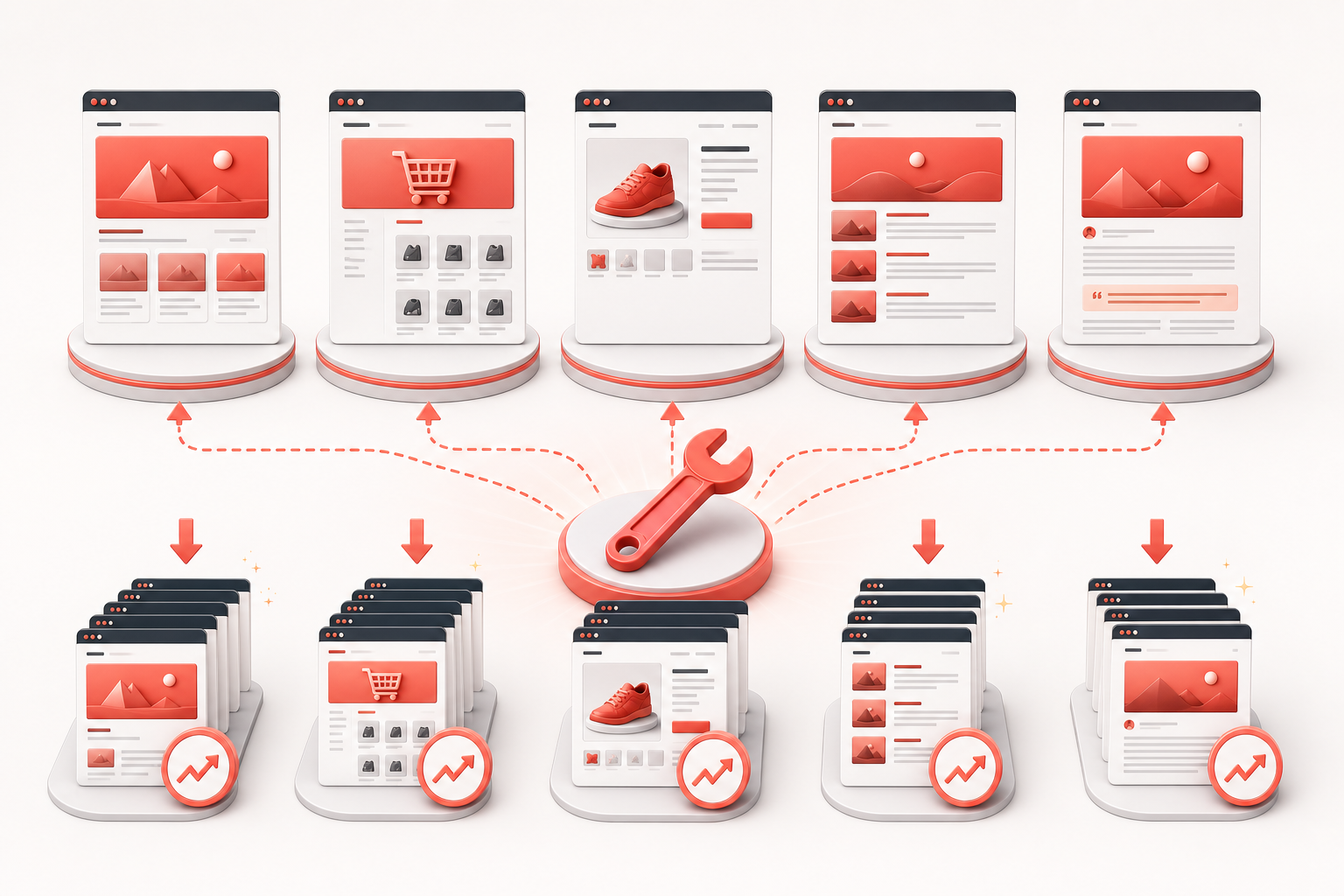
A website can share one overall design while using several internal templates. Product data, heading, image and specifications change, but block placement and code remain shared.
Video: website template pages explained
Michael demonstrates the central idea: two products may have different data while sharing the same code and placement for imagery, pricing and specifications. Changing that template affects every product, although a particular project may use separate templates for different product types.
Online-store example
Product category
Grid, sorting, filters and cards repeat across categories of this type.
Product detail
Name, image and specifications change while their code and placement remain shared.
Home page
Usually a unique page with a separate layout.

Common template types
- home page;
- product category and product detail;
- service category and individual service;
- blog listing and article;
- landing page, form, search and other distinct types;
- different templates for different product types or sections within one website.
Why work is priced per template
An HTML, semantic or performance issue in a template repeats across every URL generated from it. Repairing the template once is more logical than charging for a thousand products. However, a product correction does not repair the category because its code is different.
This is how poor LCP repair is priced: the service unit is one template, while an automatic check evaluates one submitted URL.