Review relationships, not attributes alone
Confirm the purpose and safety of external links
Open representative pages and inspect destination, anchor, paid or user origin, rel and new-tab behaviour. Missing nofollow is not an error by itself.
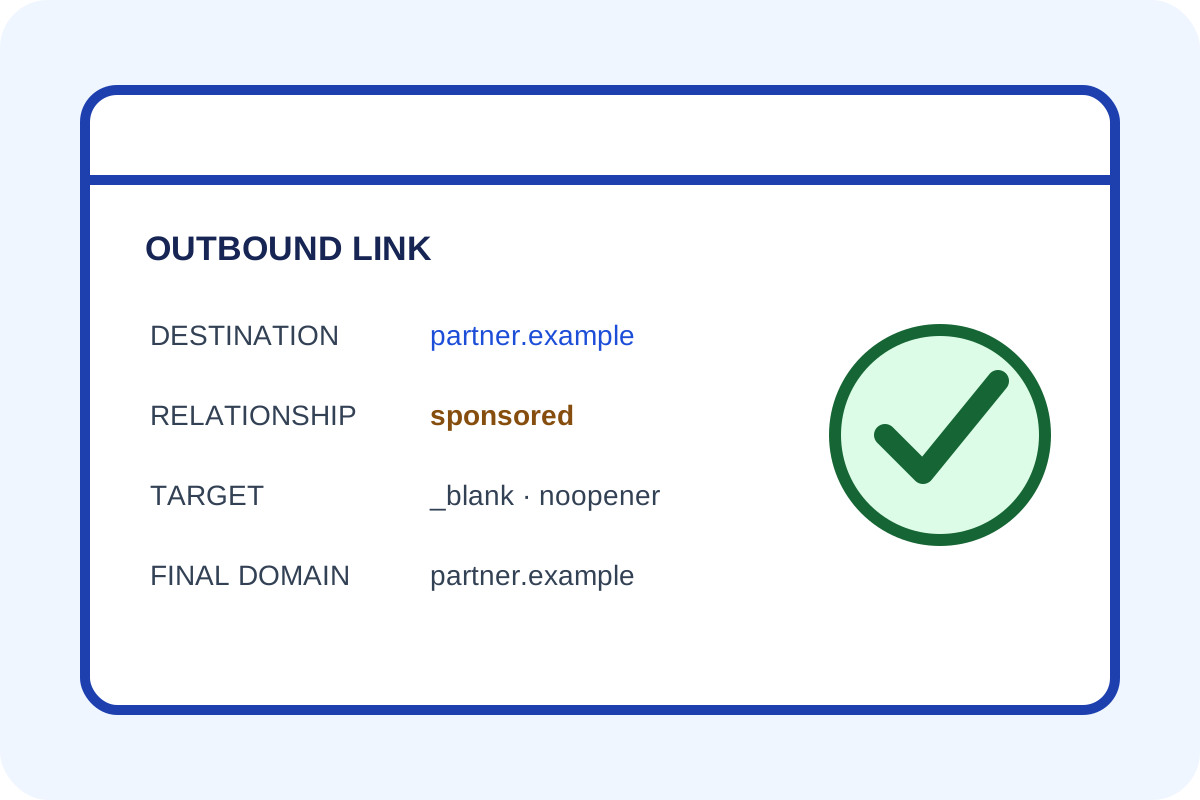
Simple check
- Open a page and list external links with their visible anchor text.
- Copy the final destination and confirm it matches the link's promise.
- Determine whether the link was paid, user-added or editorially selected.
- Use Inspect to view
relandtarget. - Follow the link and save source URL, element screenshot and final domain.
How to classify the result
| Situation | Level | Action |
|---|---|---|
| Useful unpaid editorial source | Normal | An ordinary link is appropriate. |
Paid or affiliate link without sponsored | Material | Correct the relationship. |
| Unmoderated, unqualified UGC link | Spam risk | Configure ugc and moderation. |
| Hidden, compromised or deceptive destination | Critical | Remove and review site security. |
| Unexpected new-tab behaviour | Review | Assess noopener and UX. |
Technical check
[...document.querySelectorAll('a[href]')]
  .filter(a => new URL(a.href, location.href).origin !== location.origin)
  .map(a => ({text: a.textContent.trim(), href: a.href,
    rel: a.rel, target: a.target}));
This lists links on the rendered page only. It cannot see other site URLs or infer commercial relationships.
Discrepancies and scope
A redirect may change domains, and links may appear only after JavaScript or login. Compare the browser export with a crawler and CMS data. nofollow describes a relationship as a hint; it does not guarantee that the destination cannot be crawled or indexed.
Any automated price applies only to the scope on the service page. Follow the step-by-step guide for changes.