HTML, media access, and the real preview
How to Audit Open Graph
Tag presence is insufficient: values must describe the current page, crawlers must reach the image, and the card must pass inspection after platform caching.
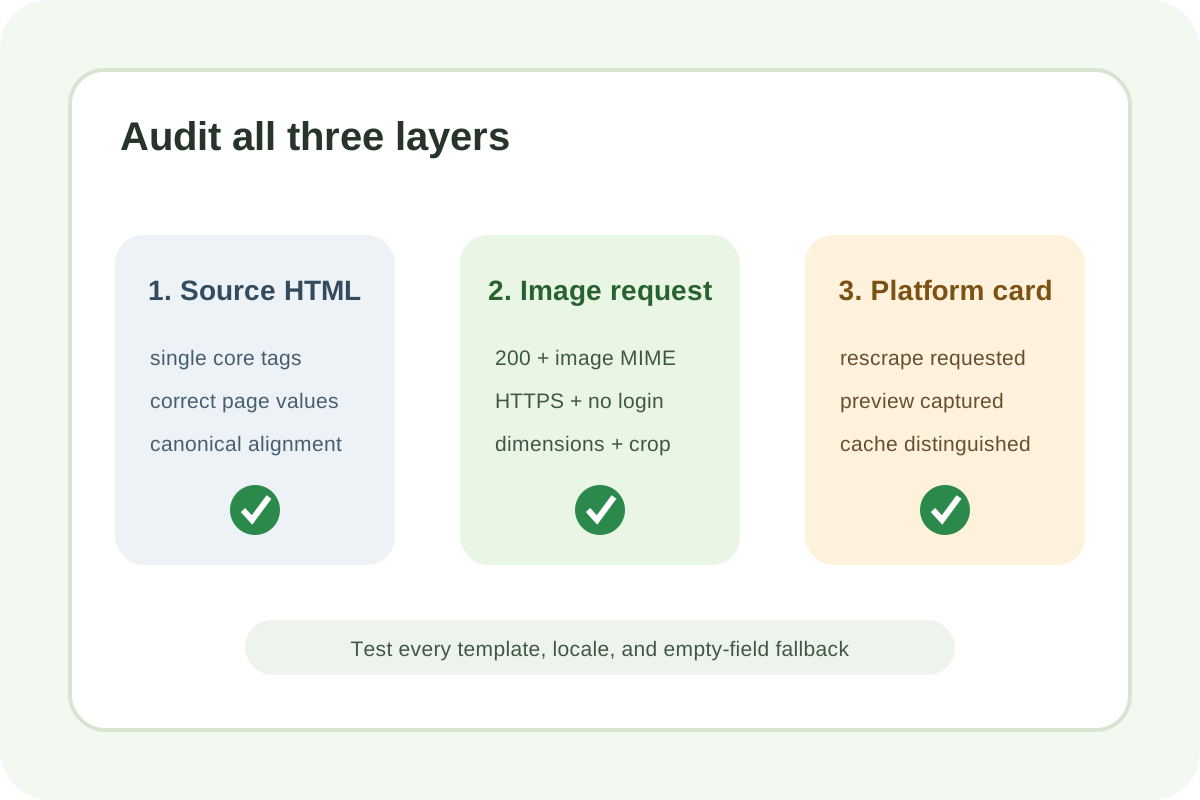
Quick audit
- Open View Source rather than Elements alone and locate every
meta[property^="og:"]. - Confirm single non-empty
og:title,og:type,og:url, andog:image; compare URL with canonical. - Open the image URL without cookies: status 200, image MIME, HTTPS, adequate dimensions, no redirect or authorization.
- Compare title/description/image with visible page content and locale.
- Run the target platform's official debugger/inspector, request rescraping, and save the preview.
- Repeat for homepage, article, product/service, category, RU/EN, and an empty optional field.
Classification
| Observation | Level | Action |
|---|---|---|
| Unique correct fields and stable card | No issue | Preserve control URLs |
| Optional description/site_name/alt absent but card works | Low | Add during the next change |
| Duplicates, generic data, wrong crop/locale, or redirect | High | Repair the template source |
| Core fields absent, image 403/404/login, or unrelated content | Critical | Restore a correct public card |
Evidence to save
- Exact URL, locale, canonical, and server HTML.
- All OG properties in output order and their data source.
- Image URL, status, MIME, bytes, width/height, and crop.
- Platform/debugger name, rescrape date, and screenshot.
- Template matrix, exceptions, owner, and retest.
An old card may be platform cache, and different crops can be normal client behavior. Browser DOM may contain tags the crawler never received. Redirects, robots/WAF, user-agent rules, and authentication create false confidence.
Next step
Follow the implementation guide or use the template configuration service with preview testing.