
26% discount
when ordering an audit "3 in 1"
- Technical optimization
- Download speed
- Semantic layout
Search engines do not see a website the way people do. We perceive text, images, audio and video; a search robot receives a document made of code and markup.
Semantic HTML is an approach in which every content block is marked with tags that describe its purpose.
In other words, an HTML5 page uses elements according to their meaning. Semantic markup creates a clear, logical page structure that browsers and search engines can interpret consistently.
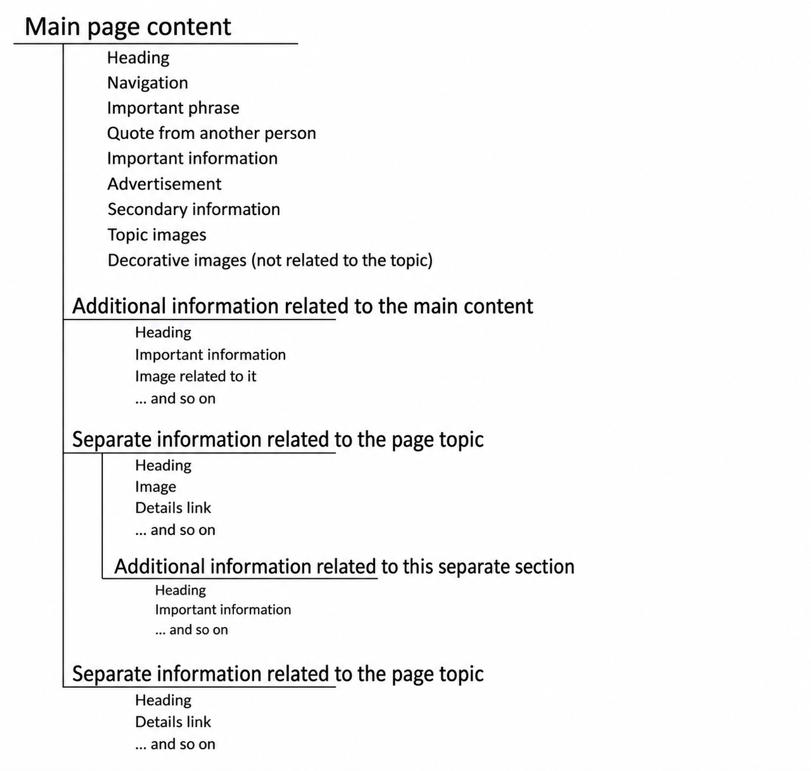
High-quality semantic layout of a template page website is as important as properly laid out building foundation. Markup tags are indicators for search bots in terms of understanding purpose and degree of importance of this or that element. The release of version 5 of the HTML language marked the emergence of many new tags. This is essential expanded the capabilities of web development, because now you can and should mark up each element of content pages. Thanks to code markup with special With tags, search engines better understand the content of the site and how its components are related to each other:
Thus, semantic layout helps machine web agents correctly analyze page, increase its ranking, prepare an extended description of the site for it display in search results, etc. Moreover, visually a web page with semantic layout not has visible differences from the site, where there is no trace of this layout.
Semantic layout has recently begun to have a strong influence on website promotion in Google search. This is evidenced by statements from search engine representatives and test results. confirmation from SEO experts. See the YouTube video for details.
According to web specialists, in practice it is difficult to find correctly marked semantically html5 page. Unreadable code, incorrectly used tags, incorrectly located in a sidebar or advertising column important for the page information – one or two technical errors can confuse the search engine and instantly ruin your site's ranking.
How confident are you in the correct semantics of your page? Hardly you, as a site owner, will want to “dive into the wilds” of the html5 language and check for the developers of your website's layout all the subtleties. There is an audit for this semantic layout of html5, which is best left to a specialist. Analysis semantic markup will give you the opportunity to be sure that there are no critical errors and correct them in a timely manner if detected.
It is necessary to check the semantic layout of the page if you want to improve your website. It would not be amiss to order an analysis of the semantic layout of the layout and layout designers before send it to the customer for approval.
How often should you check semantics?
With the timing and cost of my work on auditing the semantic layout of html5, you can see the corresponding block. If you are satisfied with the conditions, make an application with a link to the site being checked and the corresponding payment. Upon receipt of your information and payment, I will respond with a message about the start of work on checking your site.
First of all, I identify the three main template pages of the site and cross-cutting elements or blocks common to all templates. Site to site is different, and template pages can be more than three. However, in any case, I start the audit with three main ones.

A template page is a page generated from a reusable layout. For example, an online clothing store may use one catalog template for every category. The image below shows a spring clothing category with four products in each row.

A winter clothing category uses the same catalog template. The products change, but the page layout remains the same. Opening a product leads to another template with product images, specifications, price, sizes and description instead of a four-column catalog grid.
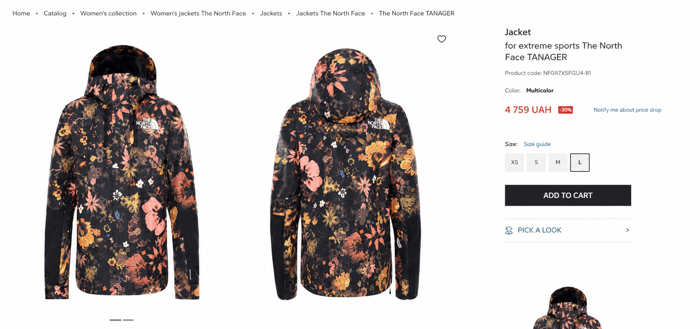
Every product page still follows the same product template. A semantic markup error in that template therefore affects every product, just as an improvement to the template appears on every product page. Auditing and correcting the shared template improves all pages generated from it.
Some web page code blocks may be specific to the mobile version only website, others - only for desktop. Therefore, both versions of the site are subject to verification. I review the page code manually. As part of the audit, I note:
As a result, I generate a visual audit report, which contains a detailed description errors found and the cost of correcting them.
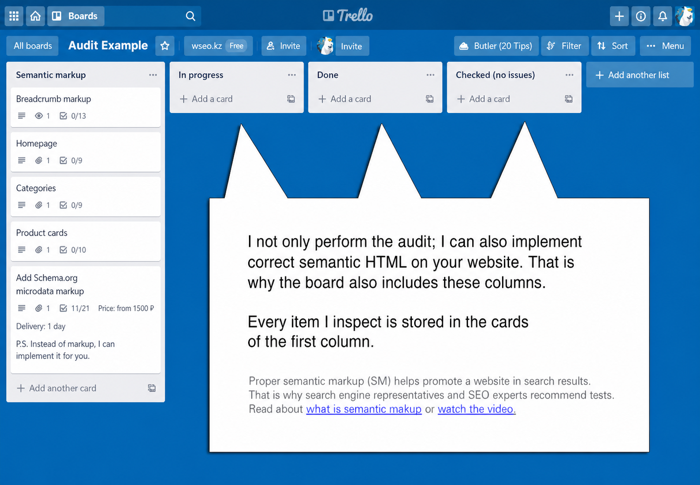
I prepare the semantic HTML5 audit as a Trello report. It is easy to use even without prior Trello experience. Separate cards cover the main page templates, such as the home page, categories, products, services and articles. Shared page elements and Schema.org markup are reviewed separately.
Each card describes the template or element being tested and contains its checklist. You can discuss any specific issue with me directly in the relevant card.
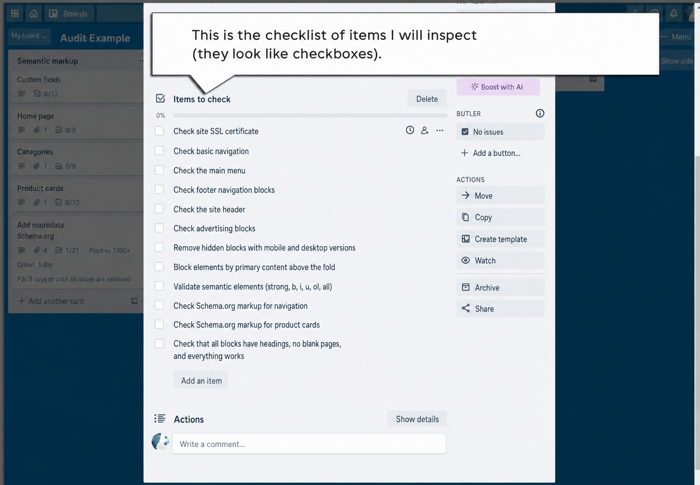
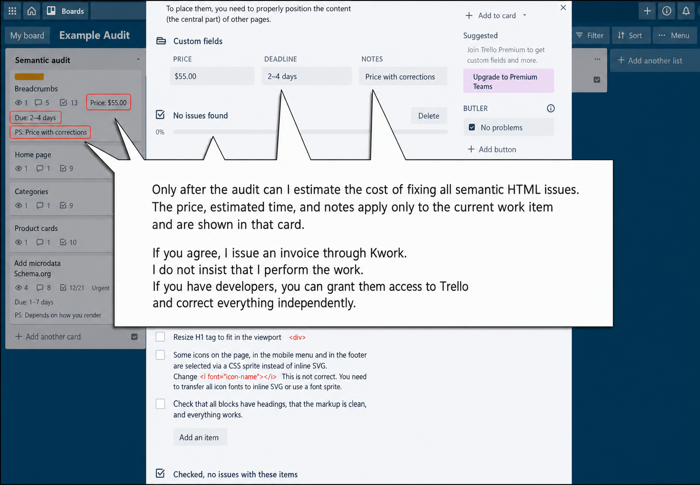
After checking, a list of problems to be corrected is generated - for each site it will be individual. Based on the results of the audit, I calculate the approximate cost of correcting the detected problems. I indicate the price and timing of the work in the report.
The report will allow you to understand the entire scope of work and plan funds. Very often this is the main reason for ordering. I indicate prices for each error. Some have it It is impossible to accurately calculate, as additional parameters influence. In such In cases, I put the cost “from” and “to”. My price may differ from others specialists, but this data is enough for you to calculate the budget for everything work or only for important corrections.

The report describes all errors in detail and provides clear recommendations for correcting them. Having received html5 semantic layout audit results, you can:
“If you don’t go forward, you go backward” - a classic quote couldn’t be better reflects today's world of web development. Everything changes: algorithms, tools, tags and variants of them use. Inaction in such a dynamically changing environment will lead to nothing good. Errors will remain, and the site will not rise to higher levels by itself. search positions. An audit of html5 semantic layout is necessary to promote a website to the TOP positions search results, which will increase user traffic to your resource.

Using the form below, you can easily order an audit semantic site markup. To work, I only need a link to the site that I need check. Please indicate it by filling out the fields of the order form. After payment, expect a message about the beginning of the audit, and within the specified time frame you will receive a report with the audit results semantic HTML5 layouts.